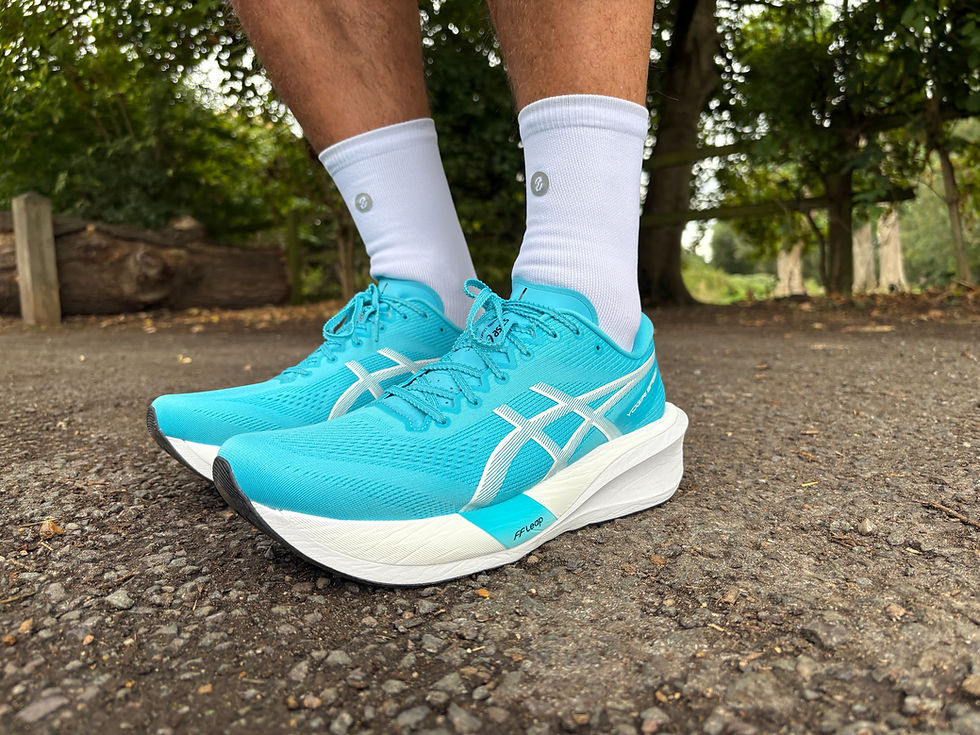
Adidas Hyperboost Edge Review: Strong Potential, But Three Big Problems


The Adidas Hyperboost Edge arrived with a lot of hype—and to be fair, some of that excitement is justified. Adidas has clearly invested heavily in creating a new kind of shoe: a plateless “super trainer” designed to compete in an increasingly popular category. And in many ways, this is a step in the right direction. But once the marketing fades, what really matters is how the shoe performs on the road. After spending time running in it, the picture becomes clearer: there’s a lot to like here—but also some very real drawbacks you need to know before buying.
Overview & Key Specs
The Hyperboost Edge sits firmly in the premium daily trainer category, both in design and price.
Key details:
Price: £170
Weight: 276g (UK 10)
Stack height: 45mm heel / 39mm forefoot (6mm drop)
Midsole: Hyperboost Pro (supercritical, PEBA-based foam)
Upper: Primeweave
Outsole: Full-coverage CPU rubber
Fit: True to size
On paper, this is a serious shoe. High stack, modern foam, and no plate—aimed at delivering a balanced mix of comfort, bounce, and versatility.
Let's get started
Adidas has clearly tried to push things forward here. The new Hyperboost Pro foam is a noticeable evolution from older Boost compounds—lighter, more responsive, and far more modern underfoot.
The build quality is also strong:
The outsole feels durable and grippy, even on mixed surfaces
The lockdown is secure, thanks to a gusseted tongue and structured heel
The overall construction feels premium and long-lasting
That said, the design won’t be for everyone. The silhouette—especially around the heel—feels bulky, and in certain colourways it can look a bit awkward.
Performance: Where This Shoe Shines
A Firm, Responsive Ride
The standout feature here is the foam. It’s:
Firmer than expected, especially compared to softer rivals
Responsive and springy, without feeling unstable
Lightweight on foot, despite the actual weight
If you prefer a more controlled ride rather than a soft, sinking feeling, this will suit you well.
Better at Faster Paces
Interestingly, the shoe improves as you pick up the pace.
At quicker efforts:
The foam feels more alive
Transitions feel smoother
The shoe becomes more enjoyable overall
It’s not a pure speed shoe, but it’s capable and comfortable when pushing the pace, making it suitable for tempo runs and steady efforts.
Stability & Outsole
Despite the high stack, stability is surprisingly good:
The firm foam helps keep things controlled
The heel counter adds structure
The outsole performs reliably across different terrains
This is not a wobbly max-stack shoe—it feels grounded and predictable.
Three major issues
1. Heel Design Issues (Biggest Problem)
The biggest issue with this shoe is the heel design and how it affects the ride. When your form is good and you’re landing midfoot or forefoot, the shoe performs well and feels responsive. But as soon as fatigue sets in and your stride drops back towards the heel, the experience changes quite dramatically. The rear of the shoe starts to feel bulky and intrusive, and the ride becomes noticeably clunky and uncomfortable. At times, it can even feel like the shoe is working against you rather than helping you. This seems to come from the way the heel extends outward, creating a sense of excess bulk at the back of the shoe. For runners who naturally heel strike, run a lot of easy miles, or train while fatigued, this can quickly become a problem and impact overall comfort.
2. Overly Warm Upper
The Primeweave upper delivers a secure lockdown, but it struggles when it comes to breathability. In warmer conditions, the shoe traps heat more than you’d expect from a premium trainer. Your feet can become noticeably hot and sweaty, with moisture building up—particularly around the forefoot. The material itself feels quite thick, and there’s not enough ventilation to keep things cool on longer runs. Compared to other shoes in this category, the lack of breathability stands out and can make the shoe less comfortable, especially during summer or harder efforts.
3. Fit & Comfort Concerns
There are also a few smaller fit and comfort issues that are worth mentioning. The toe box isn’t the most accommodating, especially if you have wider feet, and the upper doesn’t offer much stretch to adapt to different foot shapes. This can make the fit feel slightly restrictive. On top of that, there can be some minor rubbing around the toes or ankle collar, particularly during the first few runs. Individually, these issues might not be dealbreakers, but together they contribute to the feeling that the shoe isn’t fully refined yet.
Comparisons: How It Stacks Up
This is the most natural comparison.
Superblast 3: Softer, lighter, more versatile
Hyperboost Edge: Firmer, more stable, but less forgiving
The key difference is forgiveness. The Superblast handles poor form and easy runs much better, whereas the Hyperboost Edge struggles when you’re not running well.
vs Other Options
Across the broader category:
Some alternatives offer better uppers and comfort
Others provide better value for money
A few deliver a more balanced, all-round experience
The Hyperboost Edge stands out for its foam—but not for its overall execution.
Verdict: Promising, But Not Finished
This is a shoe with real potential.
The foam is genuinely impressive. It feels modern, responsive, and like a clear step forward from the older Boost compounds Adidas has used in the past. When you’re running well—holding a decent pace and maintaining good form—the shoe can feel great underfoot, with a nice balance of energy return and control.
The problem, however, is consistency.
As soon as things change—when you slow the pace, start to fatigue, or begin landing further back on the heel—the experience drops off. The ride becomes less smooth, less comfortable, and far less enjoyable overall. Instead of adapting to you, the shoe starts to feel a bit unforgiving.
When you combine that with the overly warm upper and the minor fit issues, it becomes clear that this doesn’t quite feel like a finished product. It’s more like a strong first attempt that still needs refining.
Should You Buy It?
This is a shoe that will work really well for some runners—but not for everyone.
If you’re a midfoot or forefoot striker who enjoys a firmer, more responsive ride, and you tend to run at moderate to faster paces, there’s a good chance you’ll get on well with it. In those conditions, the strengths of the foam really come through.
However, if you’re a heavier heel striker, someone who spends a lot of time running easy miles, or you often train while fatigued, this probably isn’t the best option. The heel design can become uncomfortable, and the ride loses its appeal at slower paces. Add in the warm upper and slightly restrictive fit, and it may not be the most forgiving choice—especially if you need something versatile for all types of runs.
Final Thoughts
The Adidas Hyperboost Edge is not a bad shoe—but it is a compromised one. There’s enough here to be excited about, especially the foam. But the execution isn’t quite there yet.
If Adidas refines:
The heel geometry
The upper breathability
The overall fit